A journey into the most poetic and remote part of the lagoon, where Venice rediscovers its original spirit.
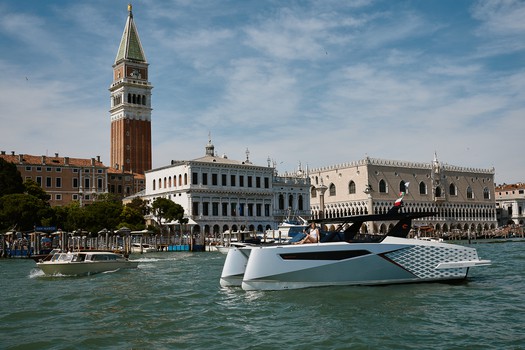
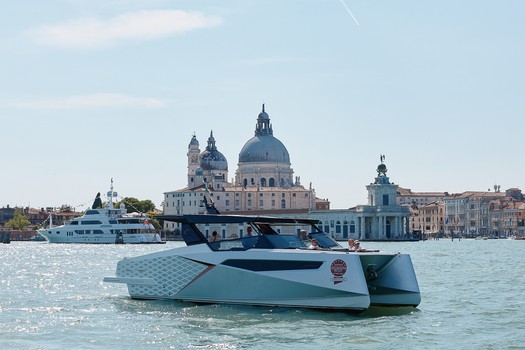
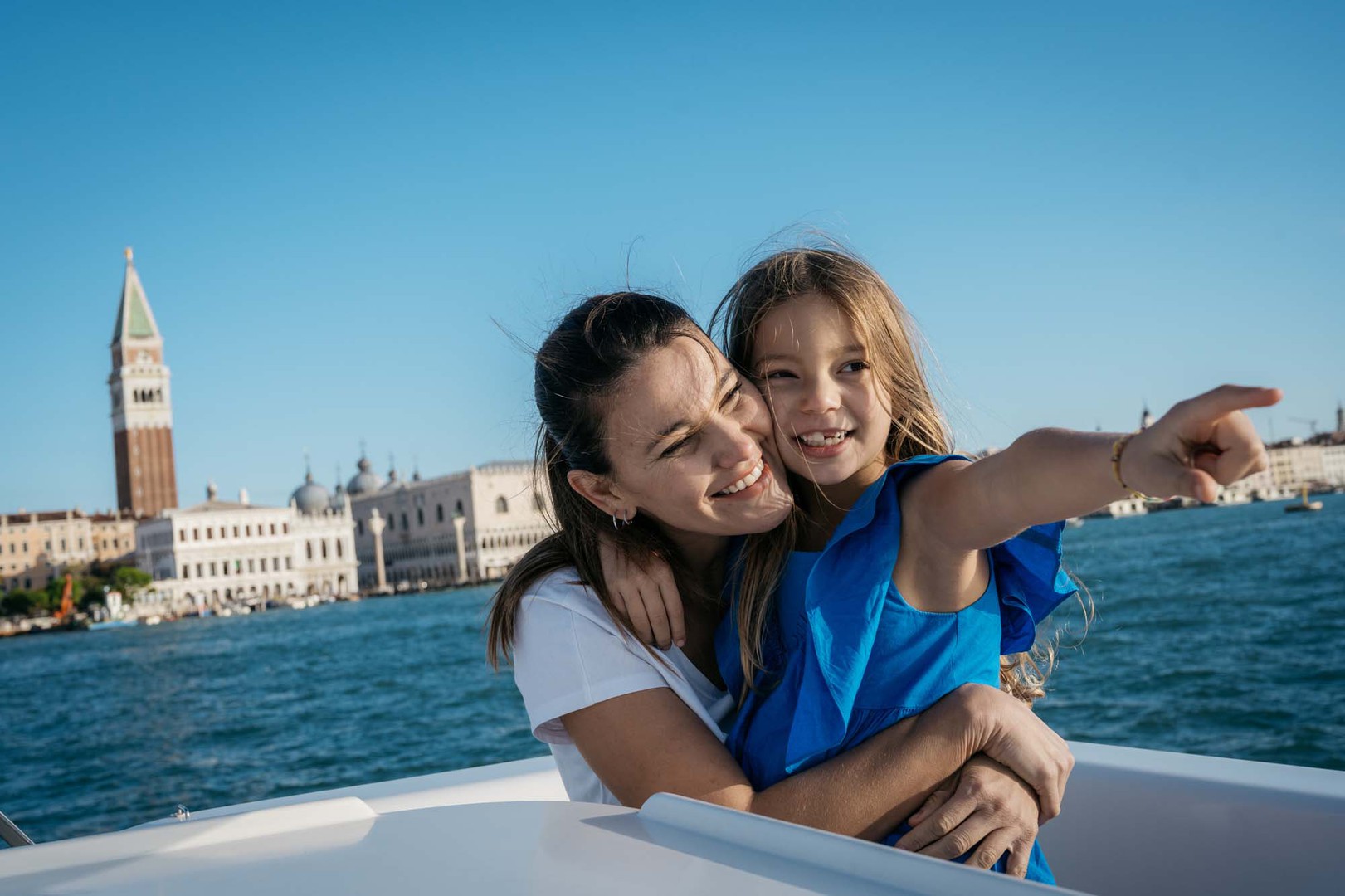
We set sail whilst the city still slumbers in the morning light. The solemn architecture of St Mark’s Square stands out against the water with a quiet grandeur: the Bell Tower watches over from above, the Basilica glitters with stone and gold, and the Doge’s Palace is reflected like a mirage.
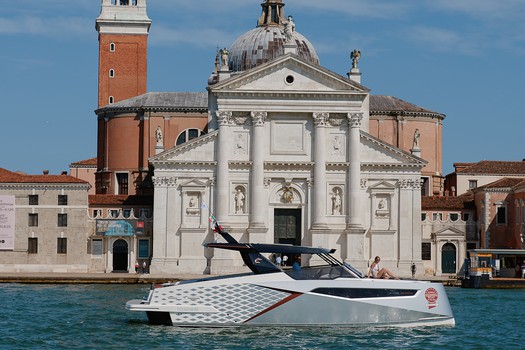
A little further on, the island of San Giorgio Maggiore emerges with perfect Palladian harmony, suspended between sky and sea.
The route continues towards Sant’Erasmo, the fertile and tranquil island where the Serenissima cultivated its secret garden. Neat fields, low banks, vegetable gardens lapped by the water: a rural landscape of surprising purity.
Then Burano appears. A burst of colour. Vivid façades, half-open windows, dancing reflections and the tranquil rhythm of an island that preserves the ancient art of lace-making.
Finally, San Francesco del Deserto: cypress trees, monastic silence, an almost unreal stillness. Here, the lagoon seems to hold its breath.
This is no ordinary boat trip. It is the Venice that few know.
The tour lasts 4 hours and can be booked either with a departure at 9 am and return at 1 pm, or with a departure at 3 pm and return at 7 pm.
Itinerary Progressive:
From the sea, Venice does not present itself: it reveals itself.
Like a city born of an ancient spell, its silhouette slowly emerges from the shimmering waterline. The Campanile rises like a stone lighthouse suspended between sky and lagoon; the Basilica sparkles with domes, mosaics and echoes of the East; the Doge’s Palace unfolds its Gothic fabric with the grace of a crown resting upon the sea.
To observe it from this privileged vantage point is to understand what travellers of every century have recounted with wonder: Venice does not belong to the mainland, but to the realm of dreams.
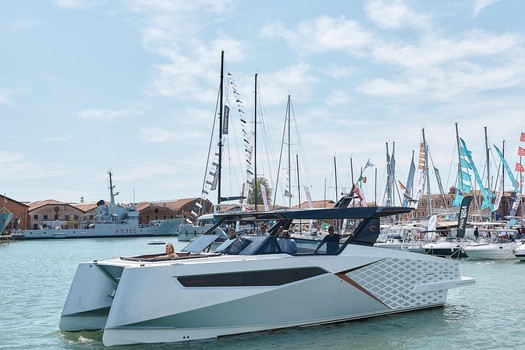
As the catamaran glides silently forward, the city still seems to float today between history and mirage.
A little further on, like a perfectly composed theatrical backdrop, San Giorgio Maggiore appears.
The island holds one of the most noble images of the lagoon: the snow-white façade of the Palladian church, the slender bell tower, the absolute geometry of proportions that seem designed to interact with the light.
Every reflection on the water doubles its beauty. Every shift in the wind alters its character.
It is a place of almost metaphysical harmony, where art meets silence and silence becomes elegance.
Then the lagoon changes its tone.
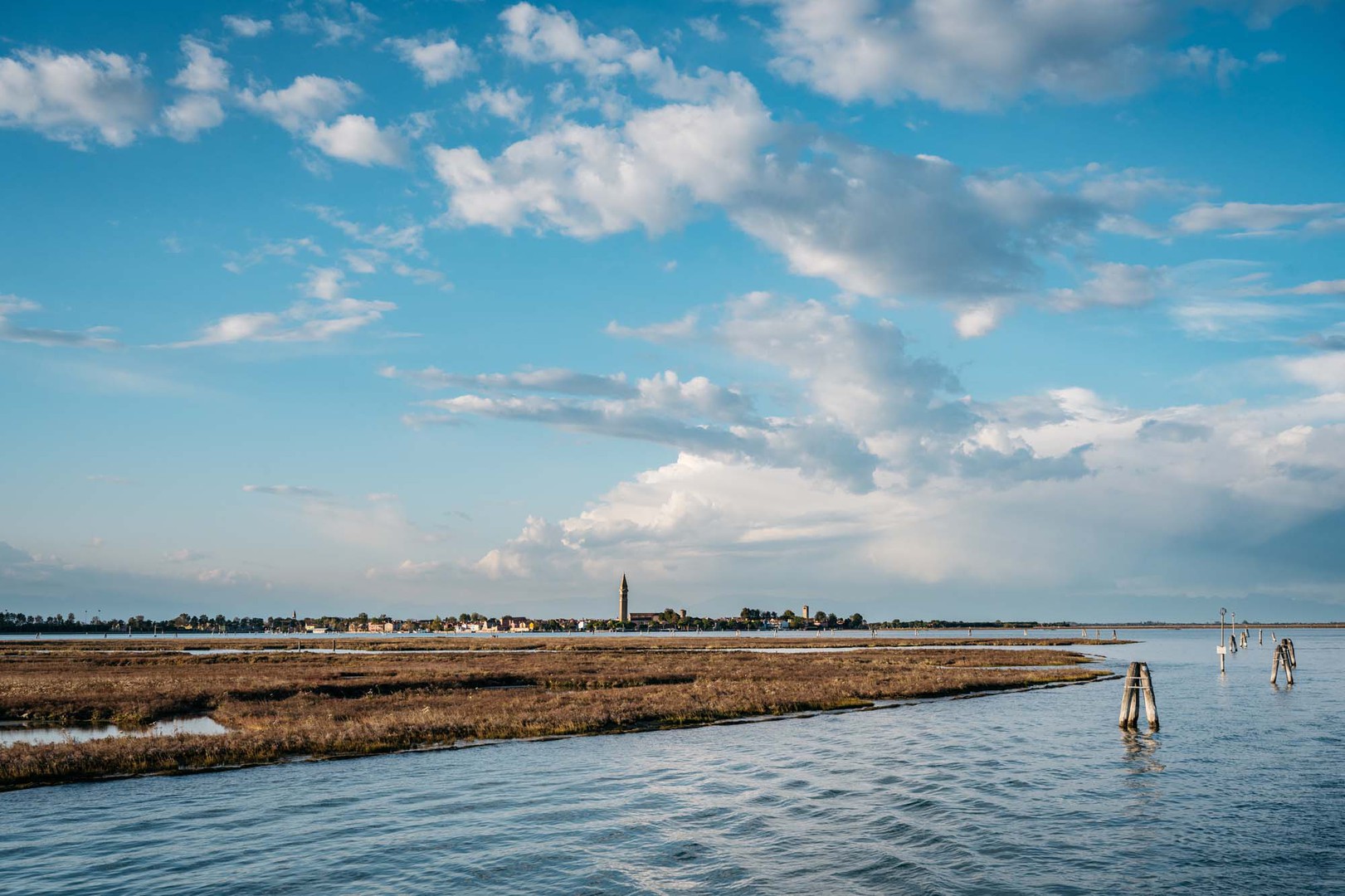
The marble and domes give way to low banks, open fields, neat vegetable gardens and quiet canals. Sant’Erasmo, known for centuries as the vegetable garden of Venice, reveals an unexpected side of the Serenissima: the fertile, simple and essential one.
Here were grown the crops destined for the tables of the nobility; here the wind sweeps through rows of plants and meadows with the same freedom as in times gone by.
The island possesses a discreet, almost secret beauty, made up of earth, water and the seasons. A sincere landscape that restores the lagoon to its original breath.
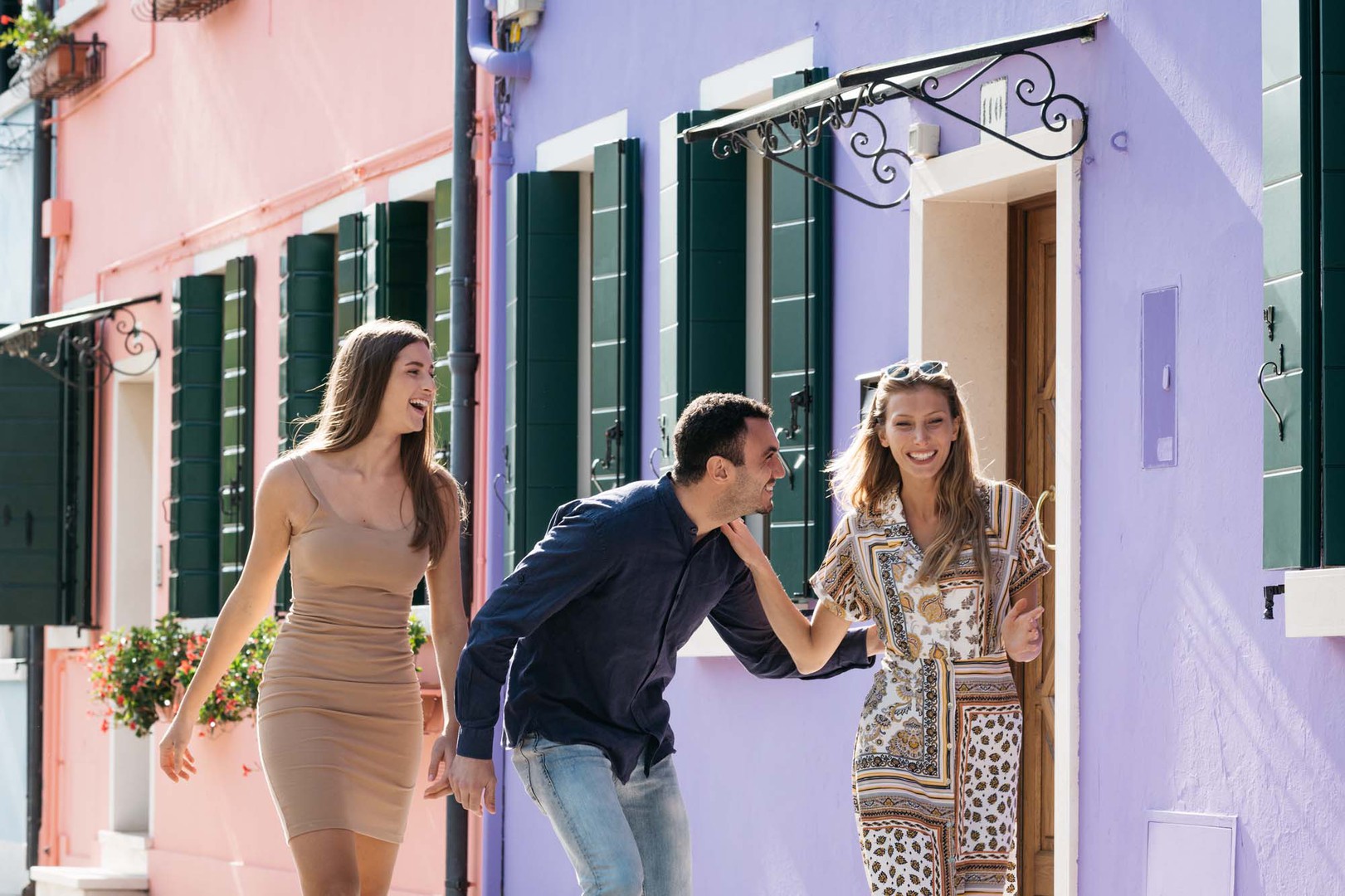
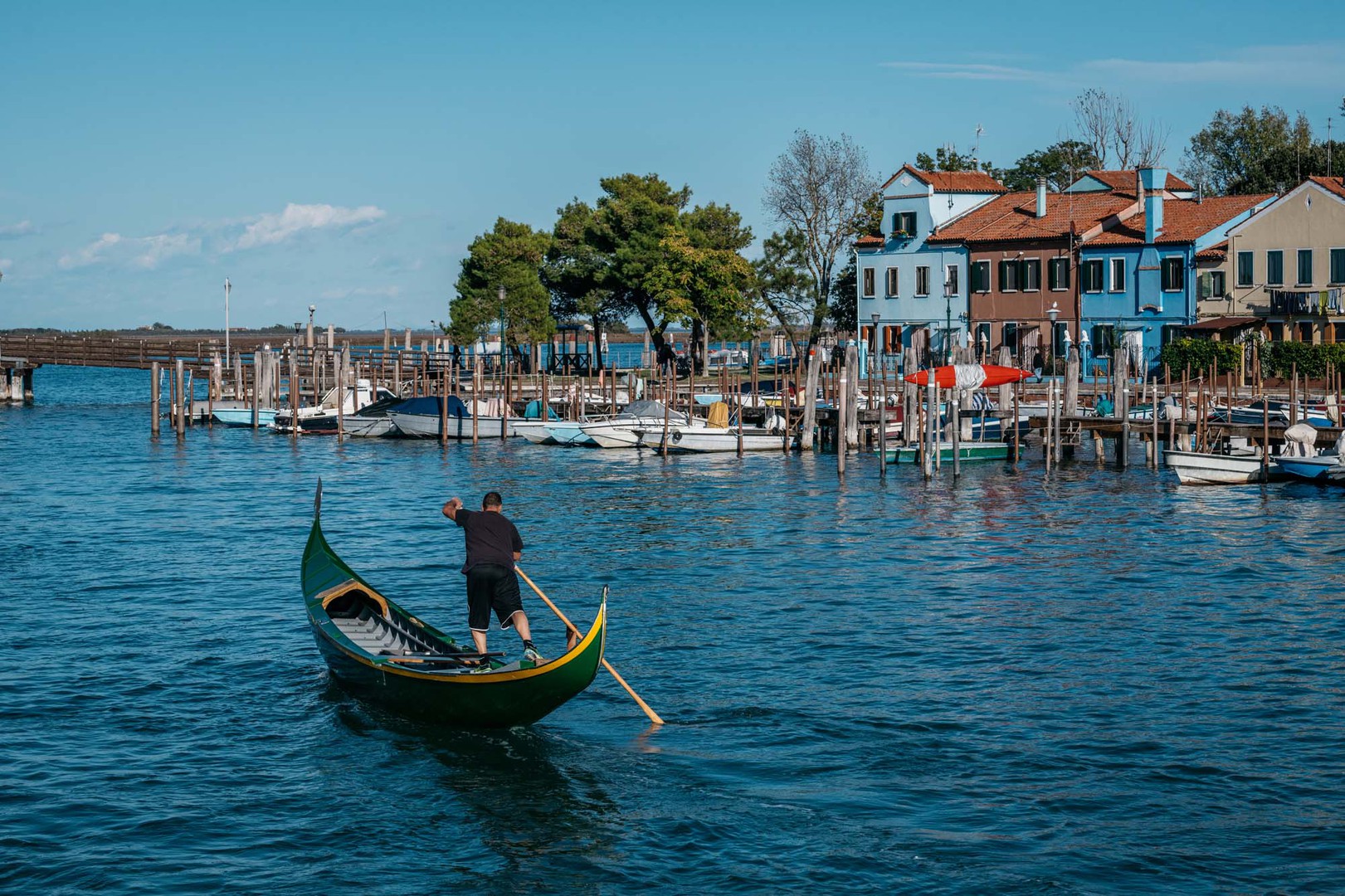
And then, suddenly, colour. Burano appears as a joyful vision suspended over the water: vermilion, turquoise, ochre, emerald and purple façades are reflected in the canals in a liquid mosaic that shifts with every glint.
Legend has it that fishermen painted their houses in vivid hues so they could recognise them even in the thickest fog. Even today, that legacy transforms the island into an unrivalled feast of colour.
But Burano is not just a visual wonder. It is skilled hands, the finest lace, half-open windows, washing hanging out to dry in the sun and the quiet rhythm of a community that proudly guards its identity.
A place one does not merely visit: one remembers it.
Finally, almost hidden amongst the folds of the lagoon, San Francesco del Deserto emerges.
A small, quiet island, enveloped by cypress trees and intimate gardens, where time seems to have discreetly stepped back. Tradition has it that St Francis of Assisi stopped here on his return journey from the East, leaving his peace as a gift.
Since then, this strip of land has remained true to contemplation.
Sailing past it means entering a rarefied dimension: the water slows, voices grow quiet, the air itself seems to become lighter.
It is one of those rare places where silence still holds a sacred value
Day excursion