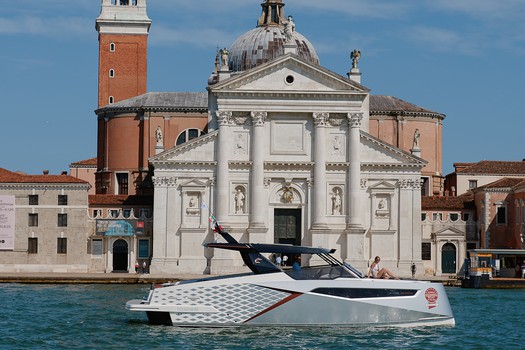
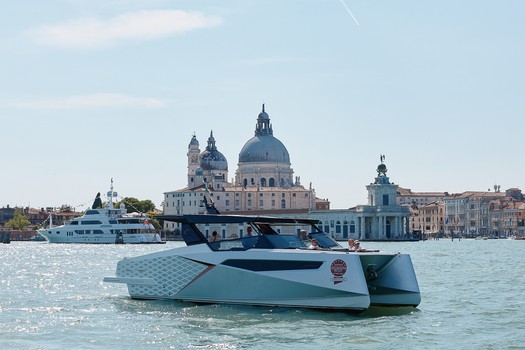
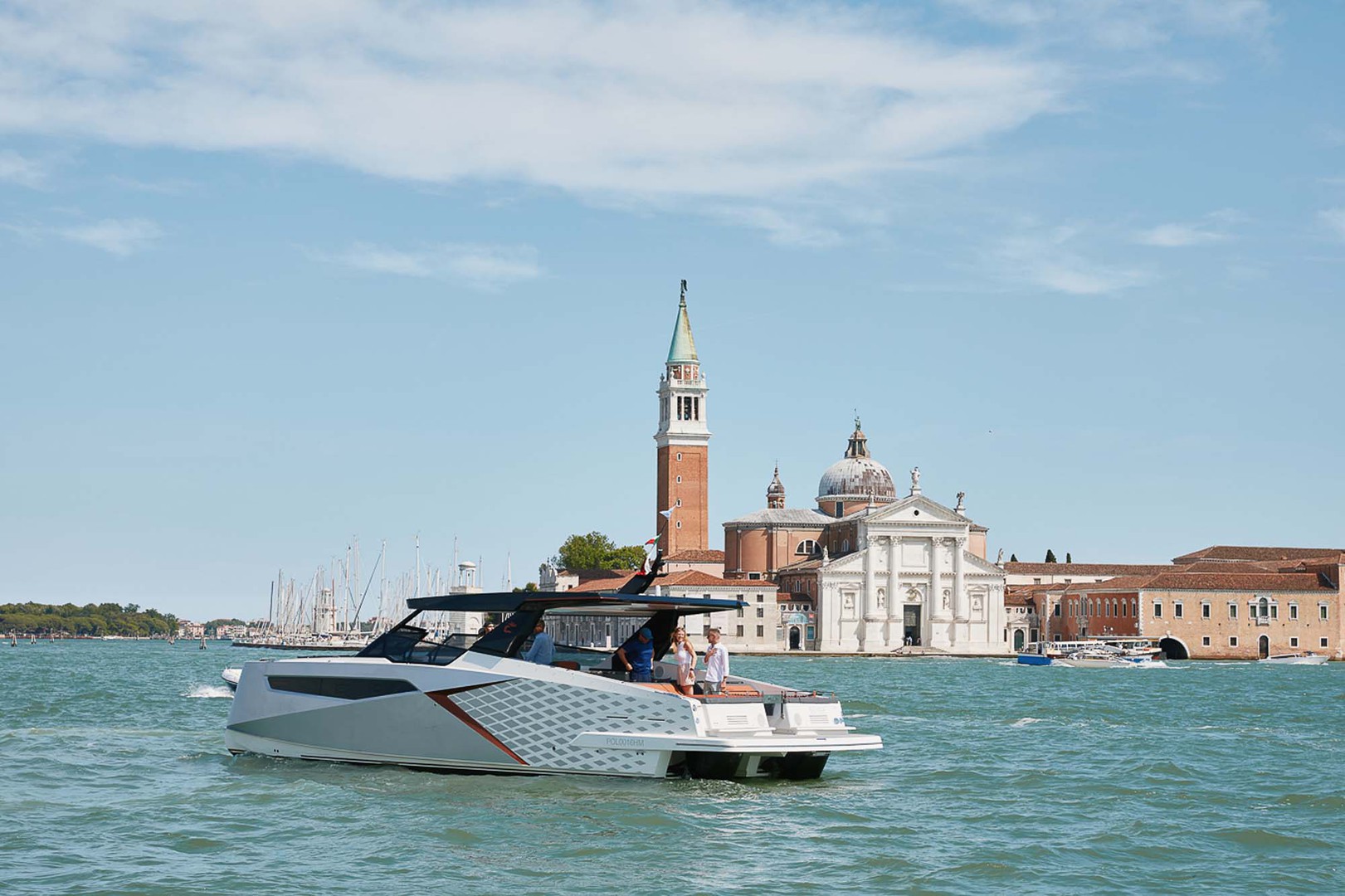
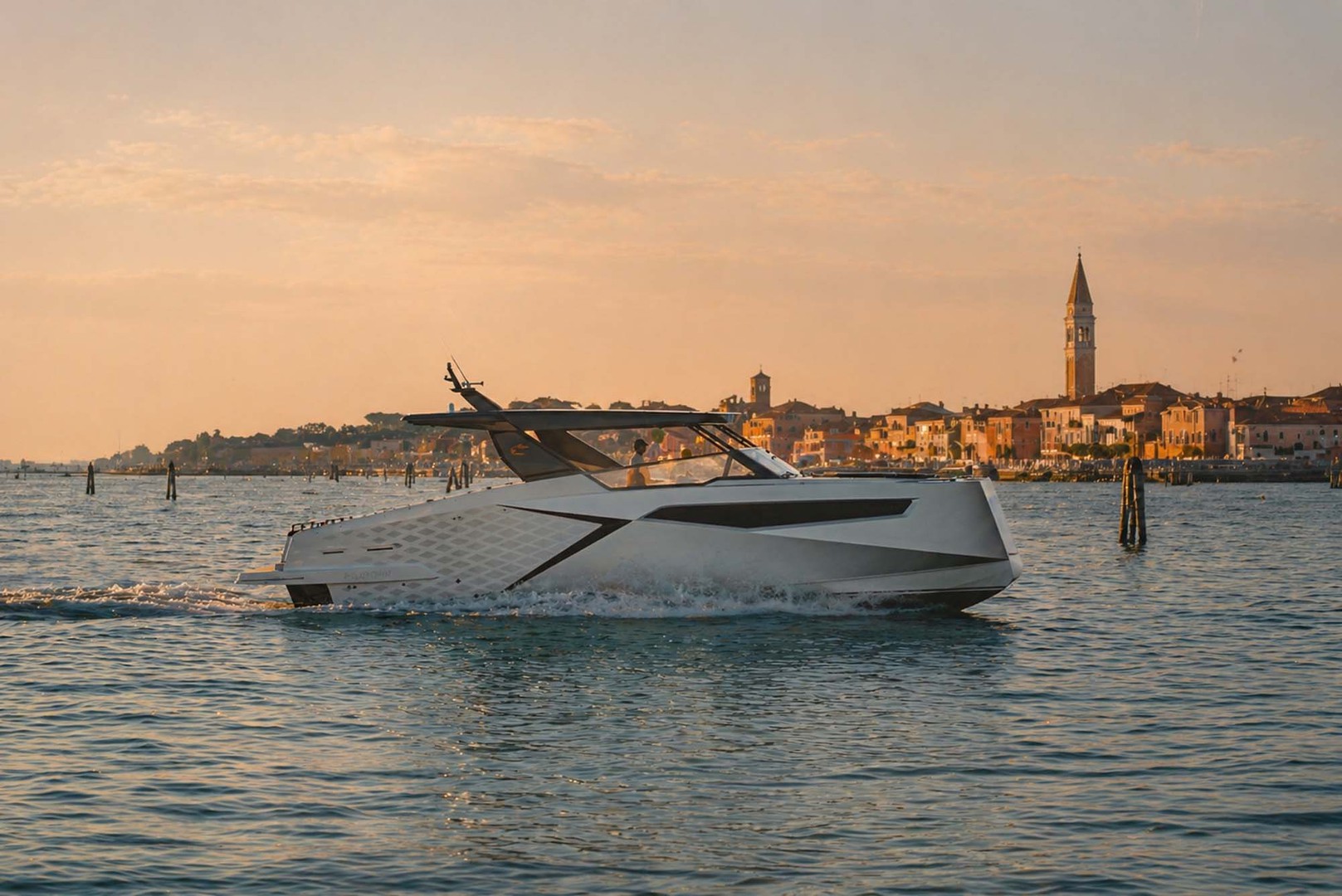
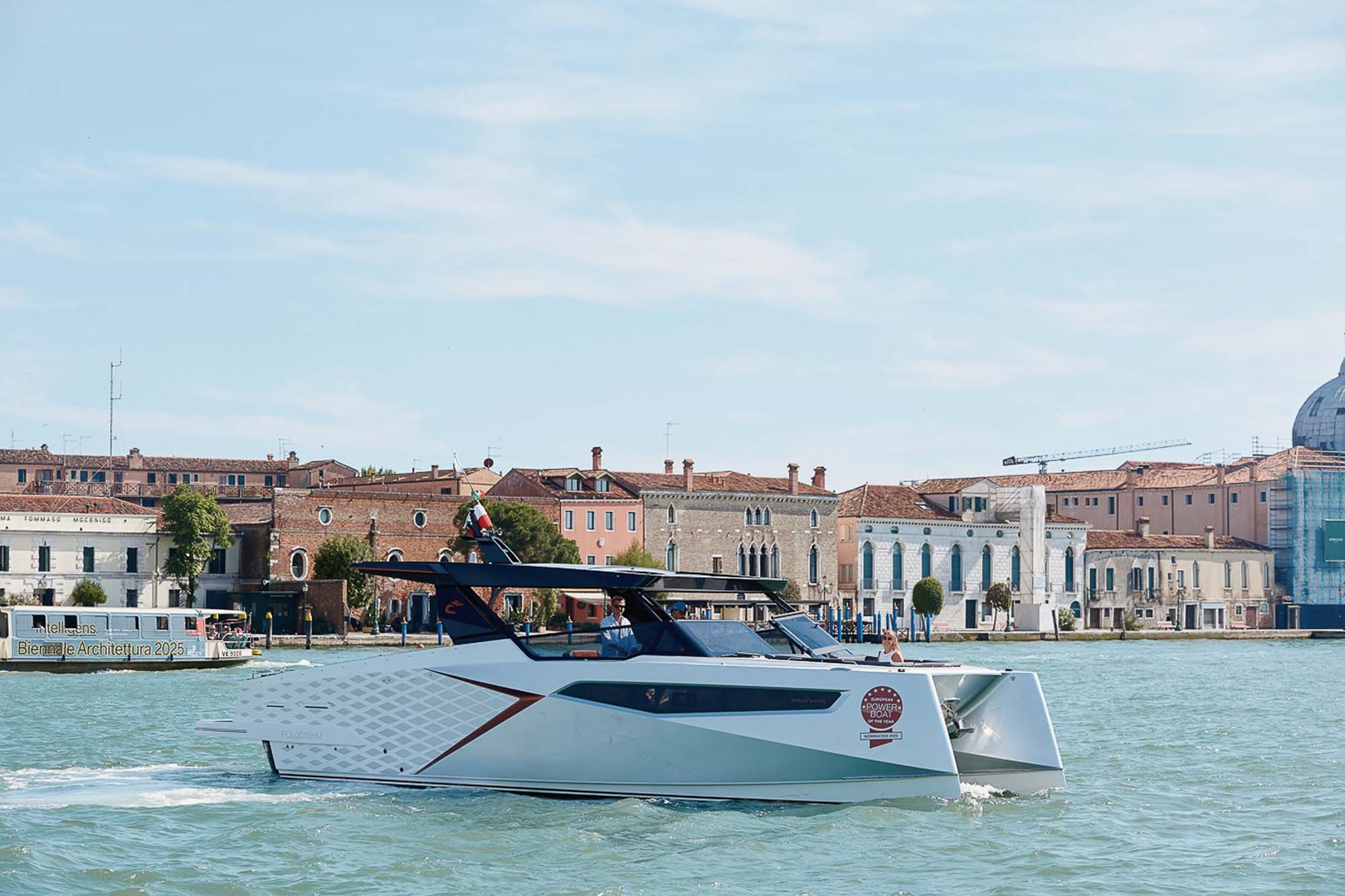
A tour dedicated to Venice’s oldest, most maritime and luminous side. The Venice that thrives on the wind, fishing nets drying in the sun and open horizons.
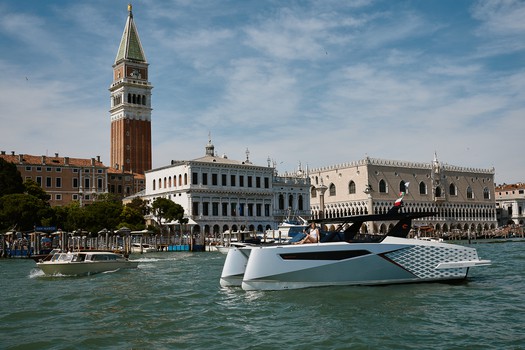
Setting off from St Mark’s Basin offers a final glimpse of the city’s monumental grandeur. Then the landscape changes: the water widens, the pace slows, and the journey enters a more intimate dimension.
Giudecca flows by, elegant and discreet: former noble factories, austere façades, solemn churches and a charm born of history, never ostentatious.
Further on, San Lazzaro degli Armeni appears like a floating cultural gem: a monastery that preserves centuries of knowledge and silence.
You then reach Malamocco, an ancient lagoon village where the original Venice survives in narrow, winding streets and an authentic atmosphere.
Then Pellestrina. A slender strip between the lagoon and the Adriatic, made up of pastel-coloured houses, slow-moving bicycles, fishing boats and the scent of the sea in the air. Here, time does not pass: it flows.
A journey for those who seek the real, unadorned, unique Venice.
Itinerary Progressive:
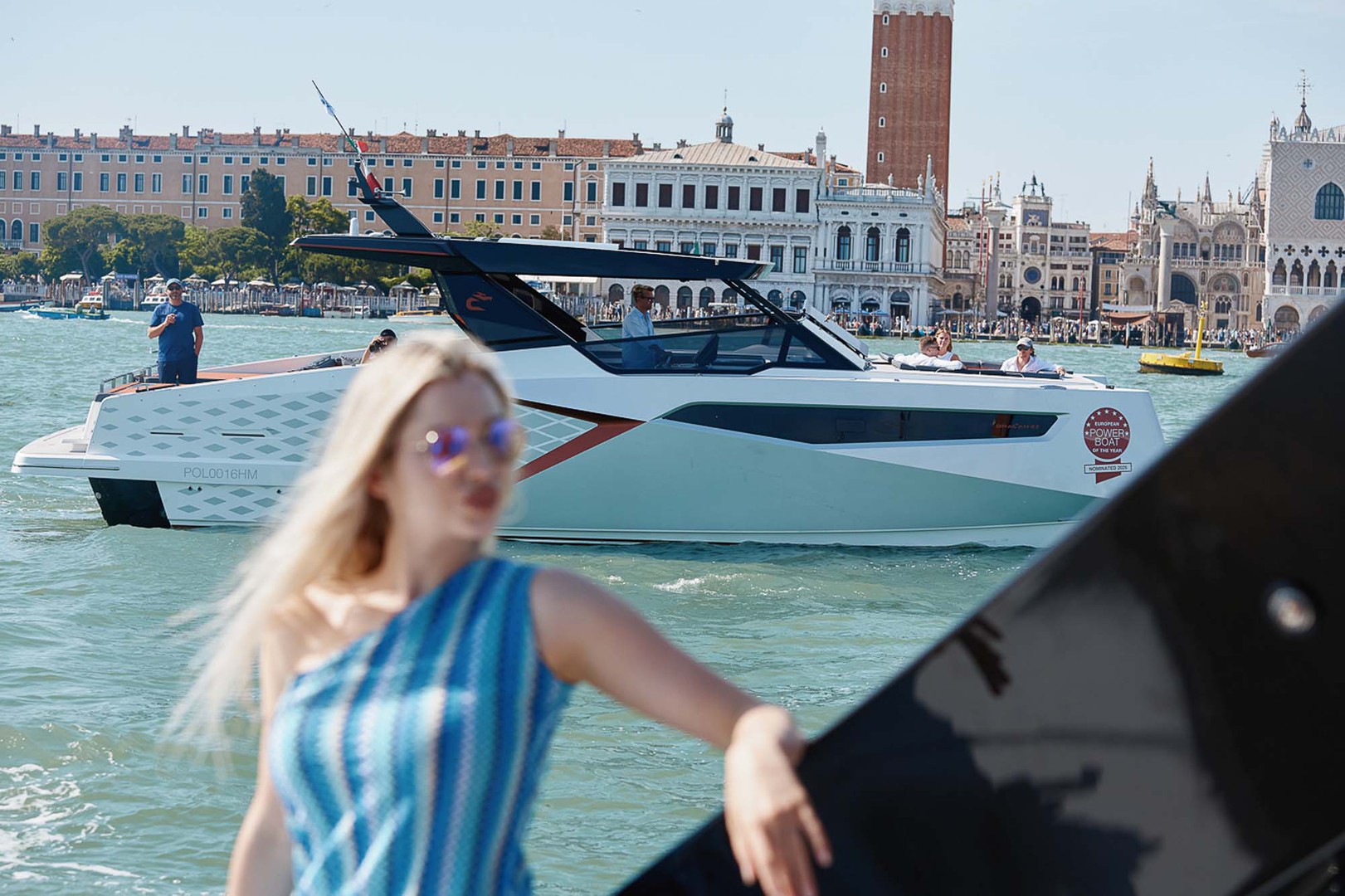
There is a place where Venice meets the sea in all its majesty: St Mark’s Basin.
Here, the water opens out like a vast open-air ceremonial hall, a liquid mirror upon which the city has displayed its power, its taste and its magnificence for centuries. The solemn façades stand like theatrical backdrops, the bell towers watch over the horizon, the domes gather the daylight and return it in golden reflections.
Sailing through this space means passing through the symbolic heart of the Serenissima, where ambassadors, merchants and sovereigns arrived by sea for their first encounter with Venice.
Even today, the Basin retains that same noble and unique theatricality.
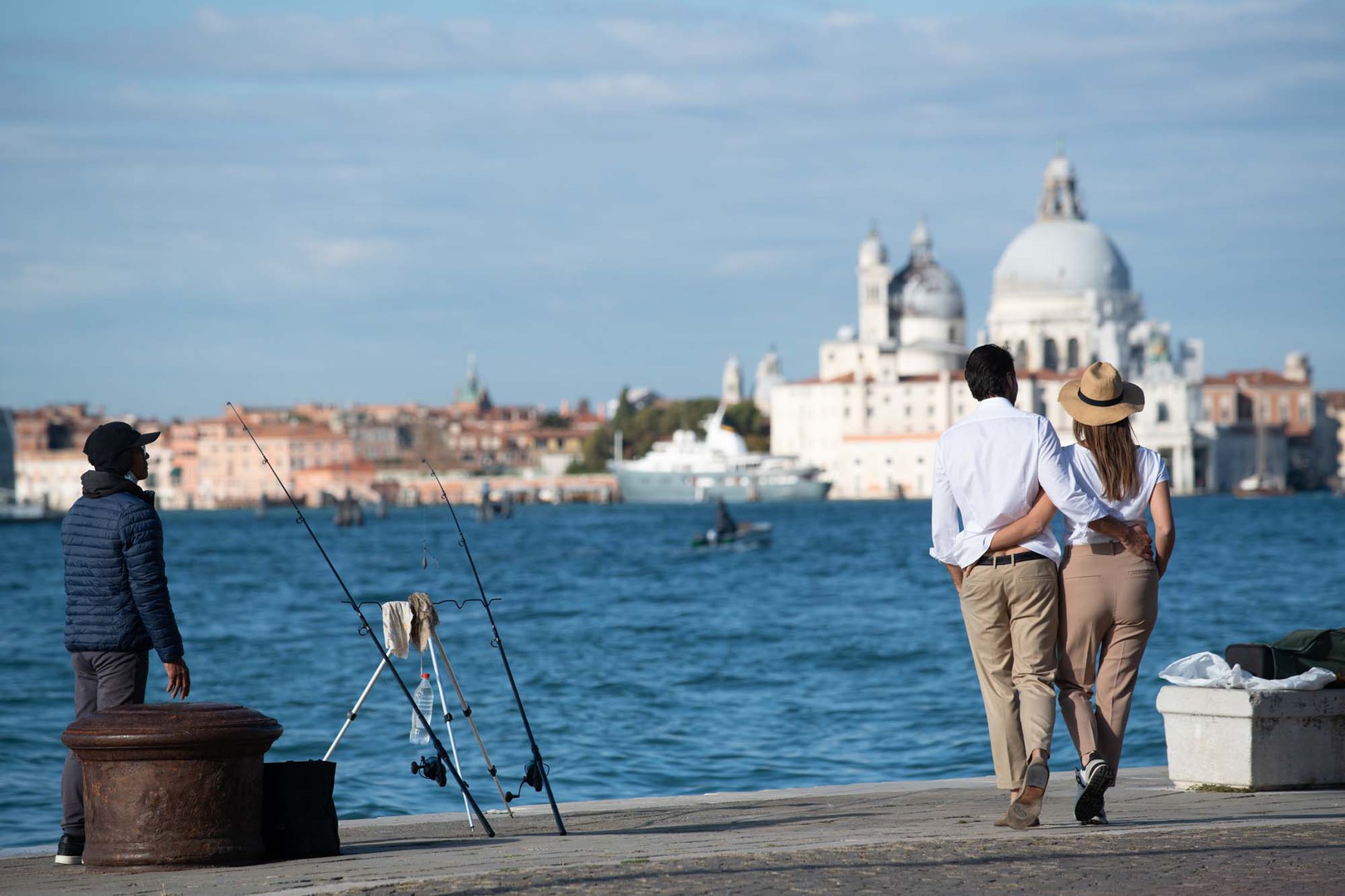
Then the route skirts the Giudecca, long and silent, almost a secluded Venice observing the main city with elegant detachment.
Here, different spirits coexist: ancient factories transformed by time, discreet convents, hidden gardens, stately residences and glimpses of authentic daily life. The façades, gracefully weathered by the salt air, tell of centuries of labour, devotion and life lived far from the busiest scenes.
Giudecca possesses a mature charm, never ostentatious. It does not seek to impress: it seduces slowly.
It is the Venice for those who know how to look beyond the surface.
Not far away lies San Lazzaro degli Armeni, a tiny island of tranquillity and learning, nestled on the water like a precious thought.
Within its intimate walls and well-tended gardens stands the Mechitarist monastery, a place that houses manuscripts, Eastern memories and centuries of culture. Here, silence is not absence, but concentration; not emptiness, but depth.
The stones, the libraries, the cloisters and the greenery seem to preserve a continuous dialogue between East and West, between contemplation and knowledge.
To approach San Lazzaro is to brush against a cultured, discreet and surprisingly cosmopolitan Venice.
Continuing southwards, Malamocco comes into view, an ancient and secluded village, one of the places where the lagoon’s most authentic spirit survives.
Before Venice ruled the world, people here were already living off the sea and the wind. The narrow streets, the cosy houses, the small squares and the simple façades retain a spontaneous grace, far removed from any pretence.
Malamocco does not impose itself: it allows itself to be discovered.
Every corner evokes a seafaring memory; every stone seems to know the slow footsteps of generations of fishermen, artisans and Venetian families.
It is a place that speaks in a whisper, and for this very reason it remains in the heart.
Finally, you reach Pellestrina, a slender strip of land suspended between the lagoon and the Adriatic, one of the most poetic landscapes in the entire Venetian archipelago.
On one side, the tranquillity of the lagoon; on the other, the full breath of the open sea. In between, pastel-coloured houses, nets hung out to dry, bicycles moving slowly, well-tended vegetable gardens and small landing places where time seems to have chosen to stand still.
The light here has a special quality: clear, limpid, ever-changing. Every hour of the day redefines the colours of the facades and the texture of the water.
Pellestrina is unpretentious and authentic. No excess, no haste.
Just the rare privilege of simplicity left untouched.